
Pool Automation Systems: What They Can Control and How They Simplify Daily Pool Care
Search
Search Search
Categories
Categories Architectural & Design-Based Pools Custom Aesthetic Finishes Edge & Overflow Pools Fiberglass Pools Flexible & Artistic Styles Freeform Pools Geometric Pools Modernization & Equipment Upgrades Perimeter Overflow Pools Pool Add Ons Pool Automation Technology Pool Building Pool Maintenance Pool Remodeling Pool Repair Salt Chlorine Generators Saltwater Conversion Tile, Coping & Finish Upgrades
Latest post
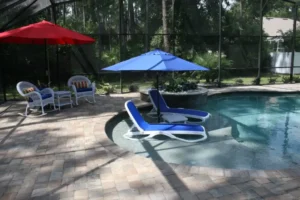
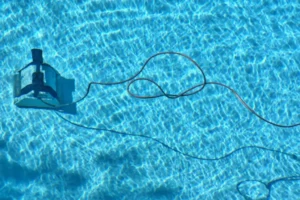
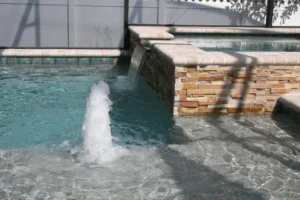
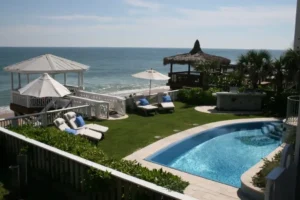

Today’s pools can do a lot more than just circulate water. With modern pool automation systems , nearly every major function of your pool and spa can be managed with a button tap or phone app—dramatically reducing hands-on maintenance and guesswork. For many homeowners, the most time-consuming part of owning a pool isn’t swimming in it—it’s taking care of it. Turning equipment on and off, adjusting run times, managing heaters, turning lights on at dusk, remembering to run the pump after adding chemicals… it all adds up. In Florida, where pools see long swimming seasons and frequent storms, this can feel like a never-ending chore. That’s exactly the problem pool automation systems are designed to solve. Instead of treating each piece of equipment as its own isolated device, automation connects pumps, heaters, lights, sanitizing systems, and features into a single, coordinated system you can control from a wall panel or smartphone. The result: more consistent water quality, easier operation, and a pool that’s ready to enjoy more often, with less effort. What Pool Automation Systems Actually Do At the heart of most pool automation systems is a control panel (or “brain”) installed near the equipment pad. This panel connects to: The filtration pump (often a variable-speed pump) The pool and/or spa heater Pool and spa lights Valves that direct water between pool and spa or water features Sanitizing equipment such as saltwater chlorine generators Optional add-ons like water features, bubblers, or landscape lighting Automation gives you the ability to: Turn equipment on and off from one place Schedule when each component runs (and at what speed, in the case of pumps) Switch between “modes” (for example, Pool Mode, Spa Mode, or Party Mode) Monitor key functions and, in some systems, water temperature or salt levels Instead of walking out to the pad, adjusting valves by hand, and flipping separate switches, everything is coordinated. Many modern pool automation systems also include Wi-Fi or smart-home integration, so the same controls live in an app on your phone or tablet. Controlling Filtration and Circulation With Precision The filtration pump is the workhorse of any pool. It keeps water moving through the filter, helps distribute chemicals, and supports add-ons like heaters and sanitizers. With traditional single-speed pumps, the only control you had was on/off. Automation changes that—especially when combined with an energy-efficient variable-speed pump. With pool automation systems, you can: Create daily schedules that run the pump at lower speeds for general filtration Program higher-speed “events” for specific tasks like vacuuming, spa use, or running certain features Coordinate pump speed with other equipment , like heaters or salt systems, that need a minimum flow rate For example, you might run the pump: 10–12 hours a day at a gentle circulation speed for filtration A higher speed for a couple of hours after heavy use or a storm An even higher speed when the spa is active, or a water feature is turned on Because the pump doesn’t run at full power all day, this approach can reduce energy usage while still delivering excellent water quality. You don’t have to remember to turn anything on or off—the schedule takes care of it. If your pool is in a storm-prone or heavily landscaped area, longer, lower-speed cycles help keep water moving and clean, which is especially important in Florida’s climate. Making Spa Use and Water Features Effortless If you have a pool and spa combination , you know how many steps it can take to enjoy the spa on a cool evening with a non-automated setup: Walk out to the equipment pad Turn valves to send water to the spa Turn on the pump Turn on the heater and set the temperature Possibly turn on the blower Turn on spa lights separately Pool automation systems condense all of this into a single command. With a dedicated Spa Mode , the system automatically: Rotates the actuated valves to isolate the spa Sets the pump to the correct speed Turns on the heater to your preferred spa temperature Activates spa jets or other connected features You can trigger Spa Mode from the wall panel—or, in many modern systems, from your smartphone while you’re still inside. By the time you walk out, the spa is already heating. The same logic applies to water features , such as: Sheer descents Bubblers or deck jets Fountains or raised wall spillways Instead of relying on manual valves and switches, automation lets you assign these features to scenes or buttons. You might have a “Relax” mode that turns on soft water features and sets the pump and lights accordingly, or a “Quiet” mode that turns them off while filtration continues in the background. Lighting Control: Safety, Ambiance, and Convenience Modern pools often include multiple zones of LED lighting : Underwater pool and spa lights Step or shelf accent lights Nicheless micro-lights for special effects Landscape or perimeter lights tied into the pool system Without automation, turning all of these on or off usually means dealing with several switches, and it’s easy to forget one. With pool automation systems , you can: Turn all lights on or off with a single button Set specific lighting scenes (for example, all-white for safety, or color shows for parties) Schedule the pool lights to turn on at dusk and off at a set time Manage brightness and sometimes even effect speeds, depending on the fixtures This isn’t just about looks. Good lighting schedules improve safety , especially for households that use the pool area at night. Automation ensures that steps, ledges, and the pool interior are illuminated consistently, without relying on someone to remember each evening. Heat and Comfort: Smarter Use of Heaters and Heat Pumps In many parts of Florida, heaters and heat pumps extend the swim season and make spas usable year-round. But heaters are among the biggest energy users in a pool system. Running them unnecessarily—or at the wrong times—can be expensive. Pool automation systems help by: Letting you set precise target temperatures for pool and spa Coordinating heater operation with pump run times, so water is flowing correctly whenever the heater is on Allowing scheduled or on-demand heating so you’re not running the heater all day just in case someone wants to swim For example, you might: Keep the pool at a moderate temperature during certain months with a scheduled heat window Let the spa sit at a lower “standby” temperature and only boost it to soaking temperature when Spa Mode is activated Use an app to start heating the spa while you finish dinner, rather than leaving it hot all afternoon By aligning heat usage with actual needs, automation makes it easier to enjoy a comfortable pool or spa without wasting energy . Helping Maintain Water Quality and Sanitation Most homeowners associate water quality with chemicals and testing kits , not automation. But a big part of consistent water chemistry is simply making sure the water is moving through the system often enough and at the right times. Pool automation systems support this by: Ensuring the pump runs on reliable schedules , so filters and sanitizers get regular contact with water Coordinating pump operation with saltwater chlorination systems or chemical feeders that require specific flow conditions In more advanced setups, integrating with sensors that monitor temperature or, in some systems, salt levels or ORP/pH (depending on equipment) Even if you still test and adjust chemicals manually, having dependable circulation patterns makes your readings more stable and predictable. After heavy rain—very common in Florida—automation makes it easy to temporarily adjust schedules to clear the water faster and help restore proper balance. Reducing Hands-On Maintenance and Human Error One of the biggest advantages of pool automation systems is that they reduce the impact of simple human forgetfulness. Common issues in non-automated pools include: Forgetting to run the pump long enough—or at all—after adding chemicals Leaving the pump off for extended periods, especially during travel Turning the heater on and forgetting to turn it off later Running the pump or features at full speed longer than necessary Automation addresses these problems by: Handling routine tasks automatically via pre-set schedules Providing clear status information (pump running or not, heater on or off, lights active, etc.) Enabling remote access, so you can check or change settings when you’re away For households with vacation or second homes, this is particularly valuable. Owners can keep water circulating, manage temperature, and even prepare the pool for their arrival without needing to be on site. How Pool Automation Systems Fit Into New Builds and Remodels For new pool construction , automation can be integrated from the start: The builder designs the plumbing, valves, and electrical layout around an automation-ready plan. Equipment choices, like variable-speed pumps and compatible heaters or chlorination systems, are selected with automation in mind. The control panel, wiring, and app access are set up as part of the final commissioning process. For existing pools and remodels , automation is often added during: A major equipment upgrade (for example, when replacing the pump, filter, and heater) A renovation that already involves new lighting, a spa addition, or re-plumbing A resurfacing project when the pool is already out of service and equipment changes are convenient In older setups, some components may need upgrading to work smoothly with modern automation—for instance, replacing older single-speed pumps or incompatible heaters. The benefit is that once everything is aligned, the pool feels like a much newer installation, even if the shell or basic shape stays the same. Why Automation Matters Even More in Florida Florida’s climate makes pools a much bigger part of everyday life than in many other states—but it also introduces challenges: Long swimming season means the system runs more of the year. Heavy rainfall can dilute chemicals and introduce debris. High UV exposure can break down chlorine faster. Storms and winds often dump leaves and organic matter into the pool. In this context, pool automation systems aren’t just a convenience—they’re a tool for keeping up with a demanding environment. Automated schedules keep water moving and filtering regularly. Integrated control makes it easier to respond quickly to storms or heat waves. Remote access is helpful for people who travel or own seasonal residences. When you combine automation with energy-efficient equipment and thoughtful design, you end up with a pool that’s easier to live with, more consistent, and more enjoyable , day in and day out. Modern pool automation systems are essentially a control center for your entire aquatic environment. They take the routines you’d otherwise have to manage manually—circulation, heating, lighting, and feature operation—and handle them predictably and efficiently. Instead of treating your pool as a chore that constantly needs attention, automation lets you step back. The system handles the everyday work, and you step in only when you want to change how the pool looks, feels, or functions at a given moment. For homeowners who want to spend more time enjoying their pool and less time managing it, automation has become one of the most impactful upgrades available—whether it’s built into a new project from the ground up or added as part of a thoughtful renovation.
Leave a Reply Cancel reply Your email address will not be published. Required fields are marked * Comment * Name * Email * Website Save my name, email, and website in this browser for the next time I comment. Δ
Your pool, done right
You’ve Imagined It. Now Build it.
Tell us about your home, vision, and goal. We’ll help you bring your backyard vision to life.